Plan your building's signage early, ideally during the design phase, not after construction wraps. Signage touches your architecture, your electrical, your permits, and your budget. When you bring in a sign partner while plans are still on paper, you avoid rework, hit your opening date, and get a better looking result. When signage is an afterthought, you pay for it in delays and compromises.
If you are putting up a new building or fitting out a new space, here is a simple way to plan the signage so nothing gets missed.
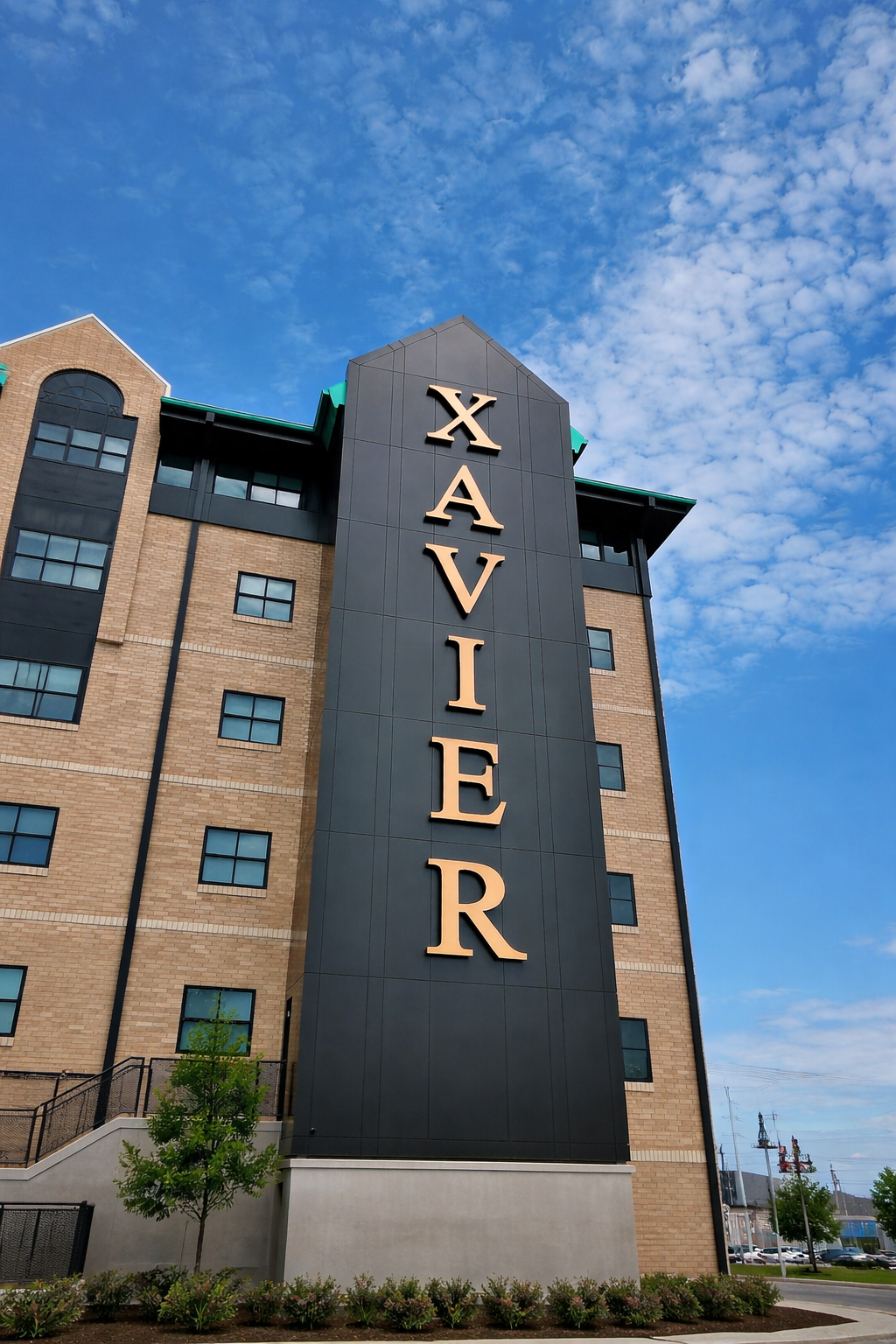
Large illuminated building letters on the Xavier University campus in New Orleans
Start signage early. Here is why.
The single biggest thing you can do is start early. A good sign partner can plan mounting points, electrical runs, and structural backing before the walls close up. That saves money and prevents ugly surprises later.
Xavier University is a good example. OPA was engaged early by the general contractors on the project. Because we were in before the parapet was clad, we pre-drilled the attachment points and electrical pass-throughs during construction. The final building-spanning letter set went up in a single day. That is what early planning buys you.
What signage does a new building need?
Every project is different. Most new buildings need some mix of the following. Use this as a starting checklist.
Exterior building ID. Your main name on the building, often channel letters or dimensional letters.
A freestanding sign. A monument or pylon sign at the entrance or street.
Wayfinding. Directional signs that help people find entrances, parking, and departments.
ADA and room ID. Code-required tactile and braille signs for interior rooms.
Directory and suite signs. For multi-tenant or multi-department buildings.
Parking and site signs. Entrances, exits, reserved spaces, and traffic flow.
Windows and awnings. Window graphics and awnings that finish the storefront.
You do not need every item on day one. A good partner helps you decide what is essential now and what can phase in later. See our full range of custom signage for ideas.
Budget and timeline
Signage costs vary widely because every sign is custom. The drivers are size, quantity, materials, illumination, and installation height. The best approach is a simple signage plan early, so you can budget real numbers instead of guessing.
Timeline matters just as much. Large exterior signs are long-lead items. They need design, engineering, permits, fabrication, and a crane or lift to install. Start them early in the construction schedule, not in the final weeks. Smaller interior and ADA signs can come later, but they still need lead time. Our our process page walks through how a project moves from concept to install.
Permitting and code
Most exterior signs need a permit, and the rules change from city to city and parish to parish. Size limits, height, illumination, and setbacks all vary. Landlords and property owners often have their own sign criteria too. Sort this out during design. A capable sign partner checks code, pulls permits, and keeps you compliant so nothing stalls at inspection.
Coordinate signage with the rest of the build
Signage rarely lives on its own. It ties into electrical, the facade, awnings, and the general contractor's schedule. Coordinate early so everything lines up.
Café Beignet on Canal Street is a good example. We designed the channel letters and a custom awning at the same time, so the scale and spacing felt intentional and the two pieces worked together. That kind of coordination is much easier when it is planned up front. It is a big reason we handle design, fabrication, permitting, and installation under one roof.
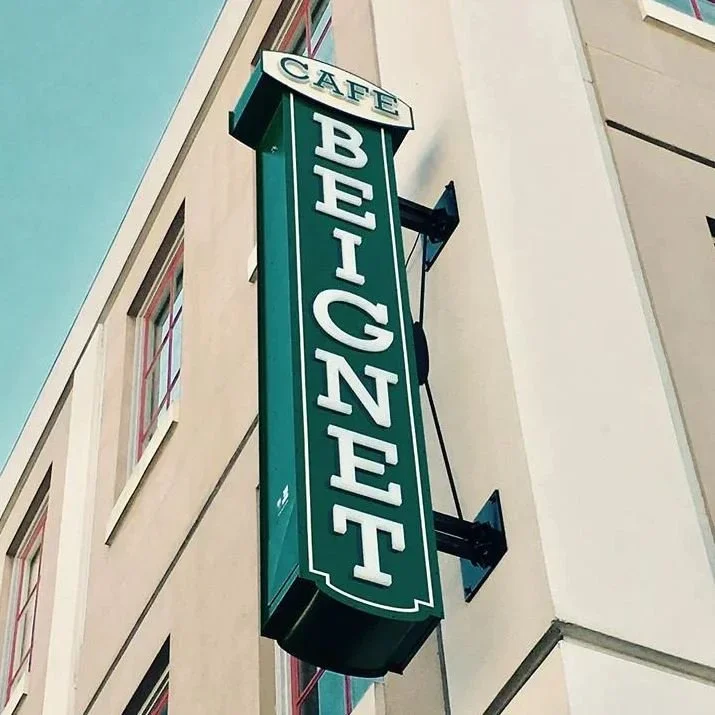
Custom Push Thru Projecting Blade Sign
Built for the Gulf South
New Orleans and the Gulf South add a few wrinkles. Our heat, humidity, rain, and salt air are hard on materials. Wind-load and permitting rules are strict for large exterior signs. Planning for our climate and our codes from the start means your signage performs for years and passes inspection the first time.
Frequently Asked Questions about Building Signage
When should I start planning signage?
During design, as early as possible. Early planning lets your sign partner coordinate mounting, power, and permits before walls close.
Do I need a permit for building signs?
Usually yes for exterior signs. Requirements vary by city and parish, so confirm early and let your sign partner handle it.
Can one company handle all of it?
Yes. OPA designs, fabricates, permits, and installs in-house, so your signage is coordinated from start to finish.
The OPA approach
OPA Signs & Graphics has helped businesses, architects, and contractors across New Orleans and the Gulf South plan signage for 50 years. We work on construction projects of every size, and we design, fabricate, permit, and install in-house at our 40,000-square-foot facility. Bring us in early and we will help you build a signage plan that fits your building, your budget, and your timeline.
Starting a new building or fit-out? Contact our team to start the conversation.
OPA Signs & Graphics. 2300 Earhart Blvd, New Orleans, LA 70113. (504) 524-1415.