Monument, pylon, and monolith signs are all freestanding signs, but they differ in height and shape. A monument sign sits low to the ground on a solid base. A pylon sign is tall and raised on one or more poles for visibility from a distance. A monolith sign is a sleek, single vertical structure, like a tall and narrow monument. The right choice depends on your site, how far away people need to read it, your budget, and local code.
Here is a simple breakdown of each type, with tips on how to pick the one that fits your property.
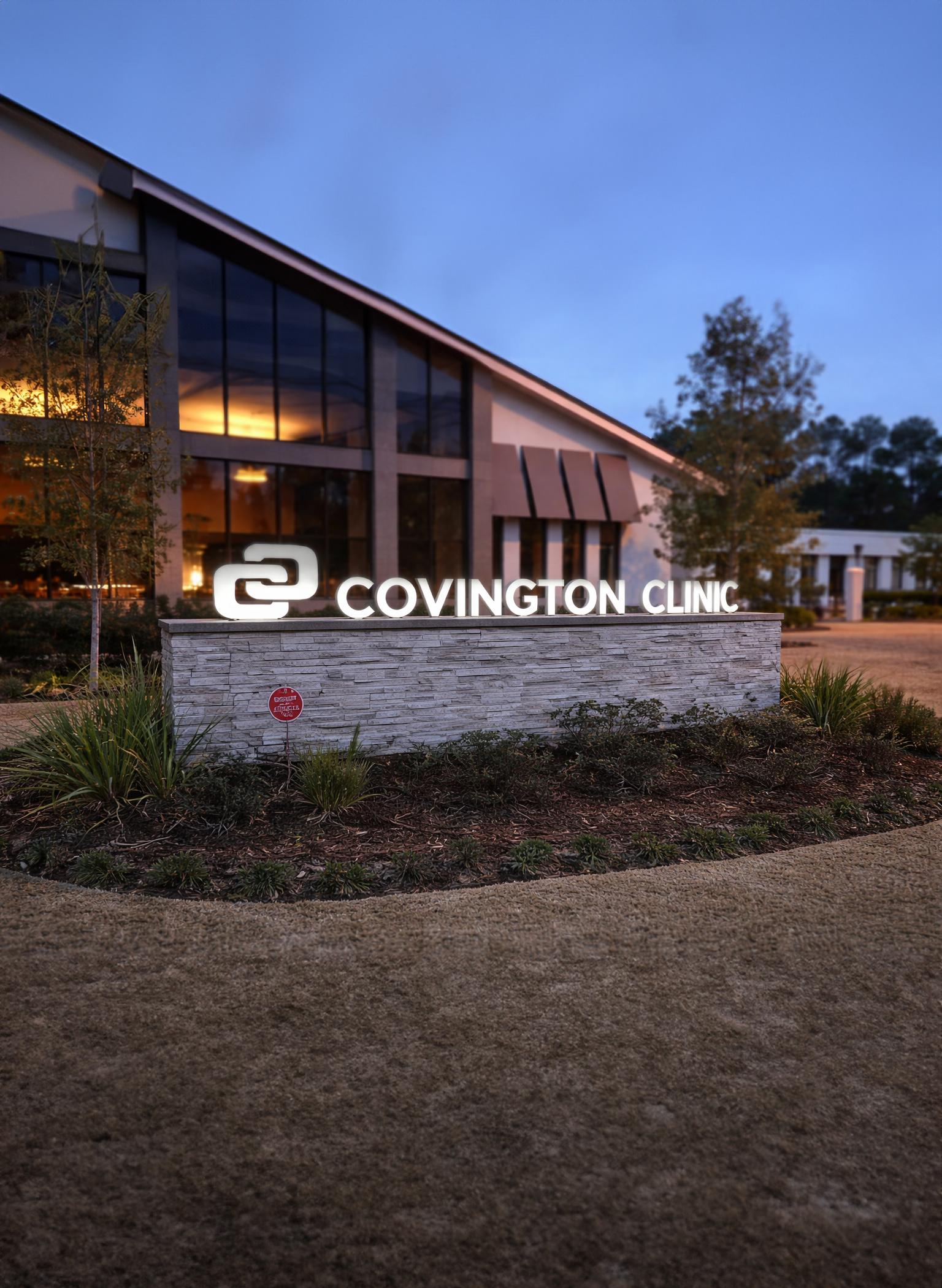
A monument sign sits low on a solid base and reads as part of the site.
Monument signs
A monument sign is a low, solid structure that sits at or near ground level. It has a continuous base, so it reads as part of your site rather than an add-on. Monuments give a permanent, high-end look. They are a natural fit for entrances to offices, clinics, campuses, and retail properties. We build these across the region, from the Covington Clinic monument to the Historic Mandeville and Gretna City Park signs. Monuments can be illuminated or not, and they pair well with dimensional letters.
Pylon signs
A pylon sign is tall and raised on one or two poles. Height is the point. A pylon lifts your name up where drivers can see it from far down the road or the highway. That makes pylons a common choice for shopping centers, gas stations, and multi-tenant properties, where several tenant panels can share one structure. Our Oakwood Mall pylon is a good example of a sign built for distance and traffic.
Monolith signs
A monolith sign is a sleek, single vertical slab. Think of it as a tall, narrow monument with a clean, modern feel and no visible gap at the base. Monoliths suit contemporary buildings and brands that want a minimal, architectural look. The monolith at Gretna City Park shows how striking this simple form can be.
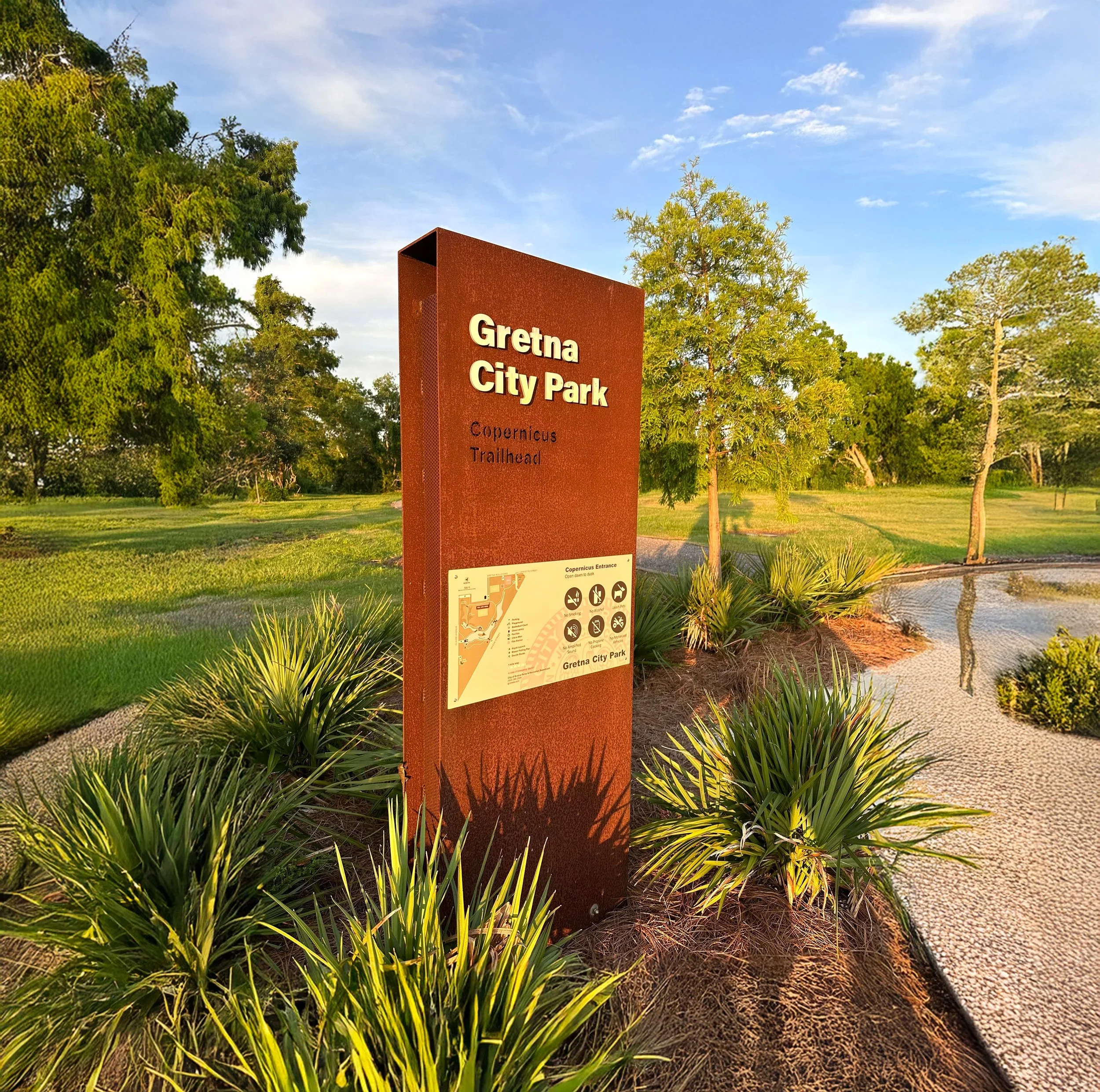
A monolith is a tall, narrow slab with a clean, modern edge.
One more option: post and panel
Post and panel signs sit between two visible posts, with open space under the sign face. The big advantage is flexibility. Individual panels can be swapped out on their own, so a tenant change or rebrand means replacing one panel, not the whole sign. That is why shopping centers, office parks, and medical campuses often choose them.
How to choose the right one
Start with a few simple questions. How far away do people need to read it? Fast highway traffic points toward a pylon. A walk-up or drive-in entrance suits a monument or monolith. What look do you want? Monuments feel solid and established. Monoliths feel modern and minimal. How many tenants share the sign? Post and panel makes updates easy. Finally, what does your budget and your local code allow? Height limits and setbacks vary by city and parish.
Materials and durability in the Gulf South
A freestanding sign is only as strong as what holds it up. Our heat, humidity, storms, and salt air demand real engineering. Quality signs here use aluminum and HDU faces, corrosion-resistant hardware, and concrete footings sized for the soil and wind load. Skimping on the foundation is how signs lean or fail. OPA is a UL Listed manufacturer of illuminated freestanding signs, which also helps streamline permitting. We handle the whole job, from survey and foundation through installation. For lit faces we can use push-through letters, channel letters, or fully illuminated panels.
Frequently Asked Questions about Freestanding Signs
What is the difference between a monument and a pylon sign?
A monument sits low on a solid base. A pylon is tall and raised on poles for long-distance visibility.
Which sign is best for a shopping center?
A pylon works well for road visibility, and post and panel makes tenant updates easy. Many centers use both.
Do freestanding signs need a permit?
Usually yes. Height, size, setbacks, and illumination are regulated, and historic districts add review. We handle permitting as part of the project.
The OPA approach
OPA Signs & Graphics has designed, built, and installed monument signs, pylons, and monoliths across New Orleans and the Gulf South for 50 years. We manage every step in-house at our 40,000-square-foot facility, from site survey and engineering to fabrication, permitting, and install. Tell us about your site and we will help you pick the right freestanding sign and build it to last.
Planning a freestanding sign? Contact our team to start the conversation.
OPA Signs & Graphics. 2300 Earhart Blvd, New Orleans, LA 70113. (504) 524-1415.