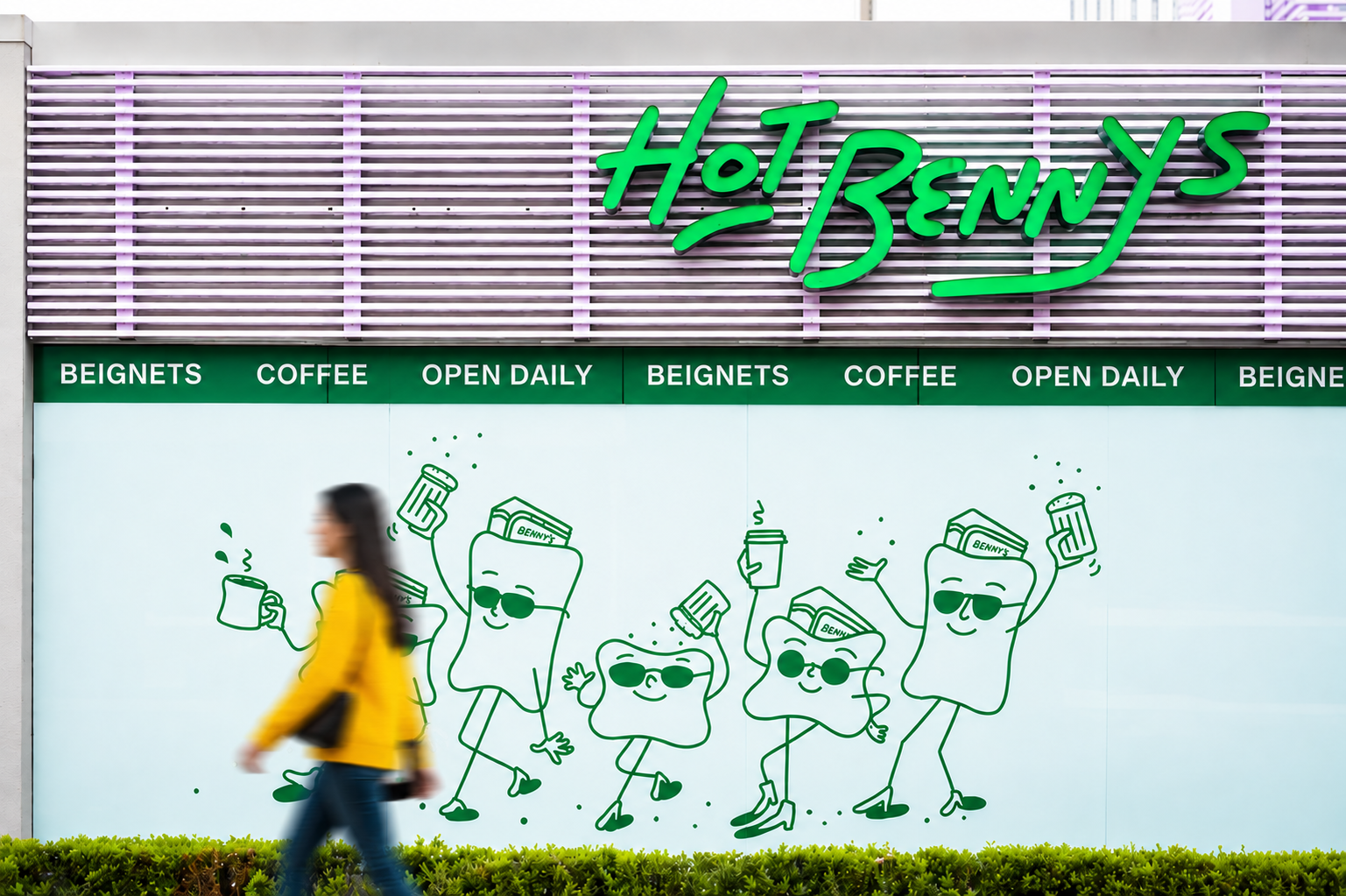
Cut vinyl graphics for Hot Bennys designed by AKA Studio. Produced and installed by OPA Signs & Graphics.
Matching your needs with the right material and price
If you have ever requested quotes for window graphics, wall murals, vehicle wraps, or storefront signage, you have probably noticed that prices can vary dramatically from one provider to the next.
At first glance, this can be confusing. After all, a vinyl graphic is a vinyl graphic, right?
Not exactly.
One of the biggest misconceptions in the signage industry is that all printed graphics are the same. The reality is that most graphics look great on the day they are installed. The difference becomes apparent weeks, six months, one year, or five years later.
The materials chosen, the printing process, the laminate, the installation method, and the experience of the provider all have a significant impact on how a graphic performs over time.
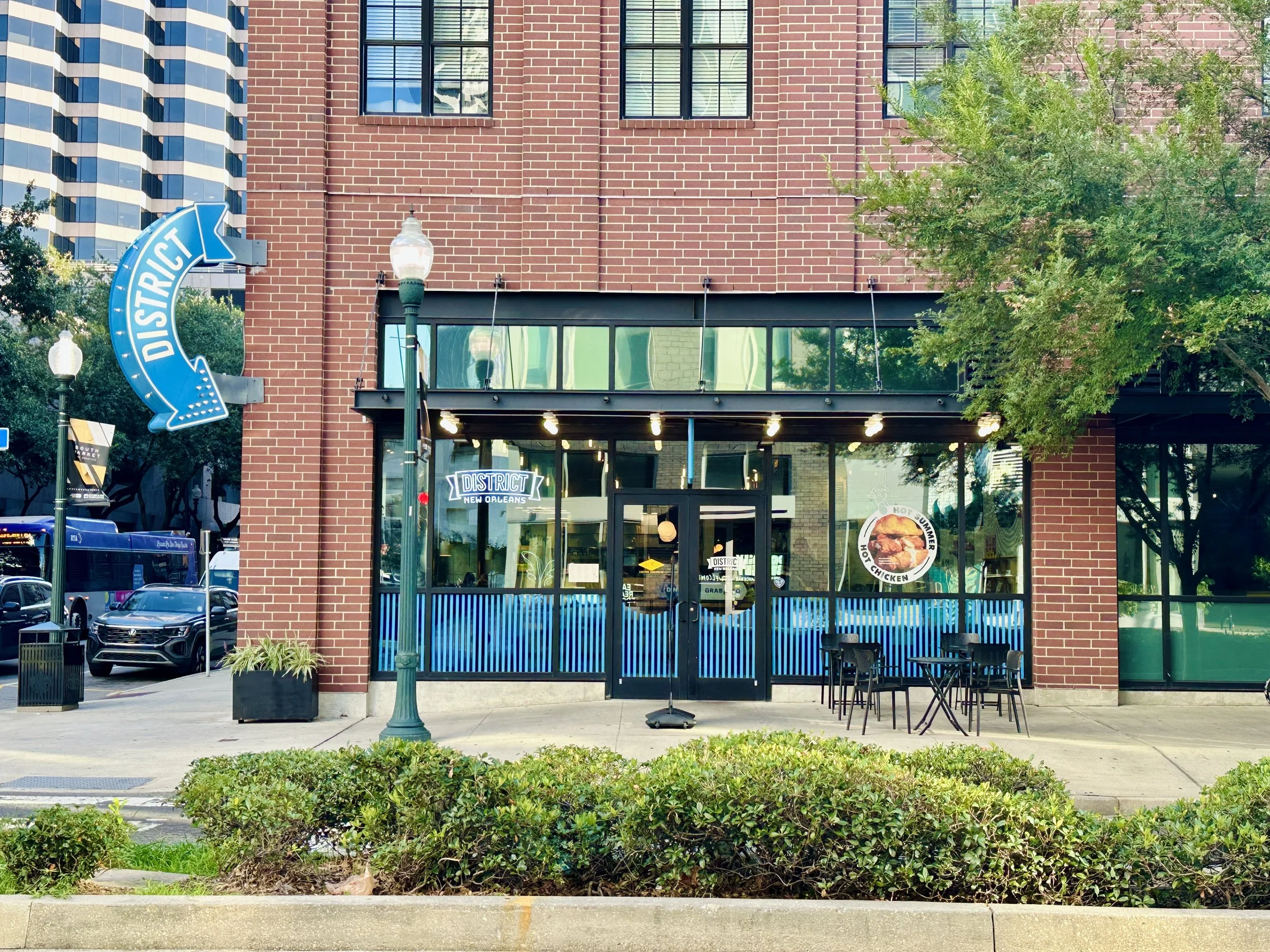
Assorted exterior vinyl window graphics for District Donuts downtown diner in New Orleans. A short-term promotional vinyl graphic is featured alongside long-term vertical vinyl striping.
Why quality matters
In a climate like New Orleans, graphics face constant exposure to intense UV radiation, heat, humidity, rain, and frequent temperature swings.
A low-cost graphic may look identical to a premium product on installation day. Months later, however, the cheaper material may begin to shrink, fade, crack, peel, or leave adhesive residue behind.
This is why experienced sign providers spend so much time selecting the right vinyl for each application rather than simply choosing the least expensive option. The ideal material depends on the goals of the project. For a temporary promotion, fast turnaround and affordability may be the highest priorities. For permanent storefront branding, investing in premium materials can significantly improve longevity, reduce maintenance, and help avoid the cost and disruption of premature replacement.
Choosing the right vinyl from the start ensures the graphic performs as intended throughout its expected lifespan.
Printed Vinyl vs. Cut Vinyl
Vinyl graphics generally fall into two categories.
Printed Vinyl
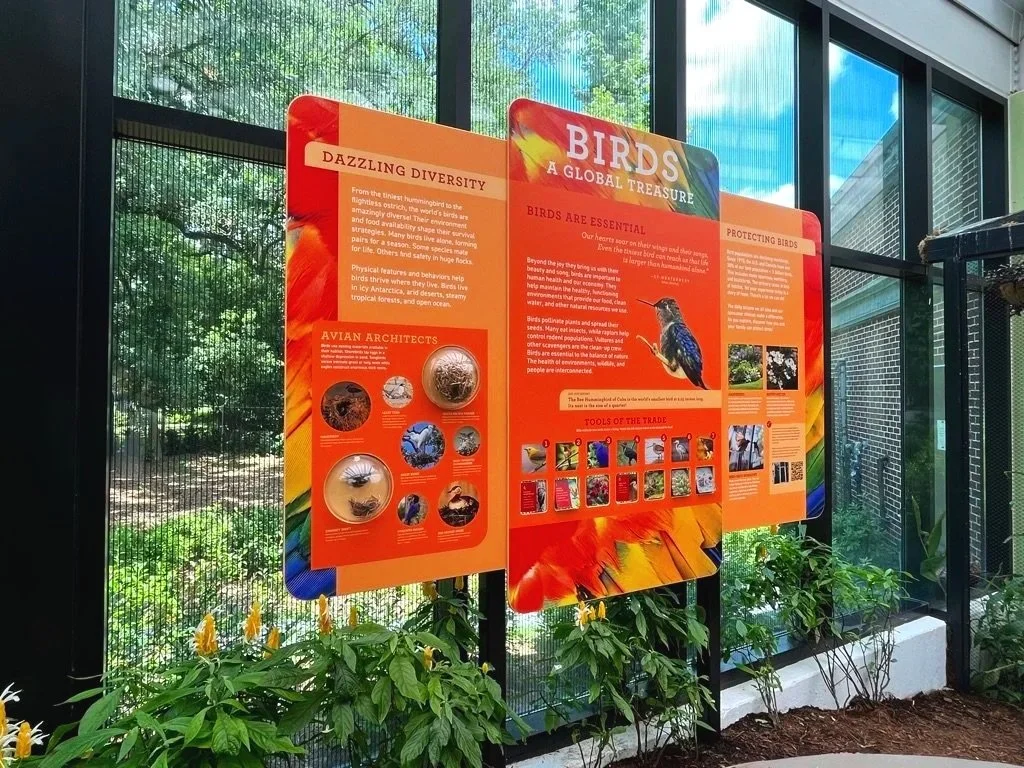
A fabricated permanent multi-tier informational standee for the Audubon Aquarium featuring printed graphics. Cast vinyl was clear-coated due to the humidity of the environment and the sign’s high-touch location by human hands and bird beaks.
Printed vinyl uses large-format printers to reproduce photographs, gradients, textures, logos, and full-color artwork.
This is the material used for:
Printed vinyl offers virtually unlimited design possibilities and is ideal whenever detailed graphics or multiple colors are required.
Cut vinyl
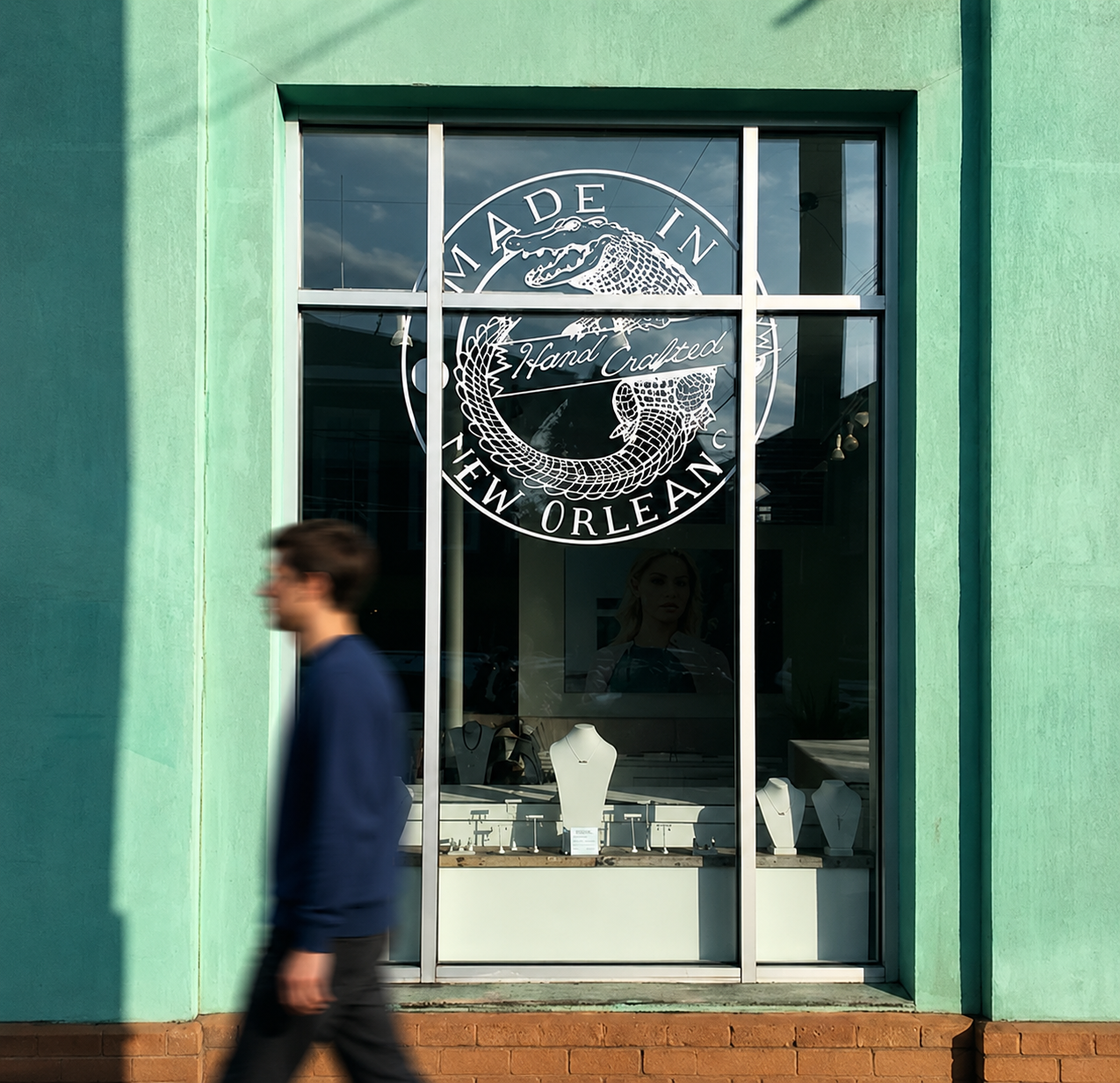
Cut vinyl window decal produced by OPA Signs & Graphics for Jose Balli on Magazine Street in New Orleans.
Cut vinyl begins as a solid-colored film that is precision-cut into letters, logos, or shapes.
This approach is commonly used for:
Because the color exists throughout the film rather than being printed on the surface, many cut vinyl products offer exceptional durability and color stability.
Understanding Calendared and Cast Vinyl
Not all vinyl films are manufactured the same way.
Monomeric Calendared Vinyl
Monomeric calendared films are generally the most economical option.
They are best suited for:
Temporary promotions
Short-term events
Seasonal graphics
Budget-conscious projects
These materials tend to shrink more over time and typically offer the shortest outdoor lifespan.
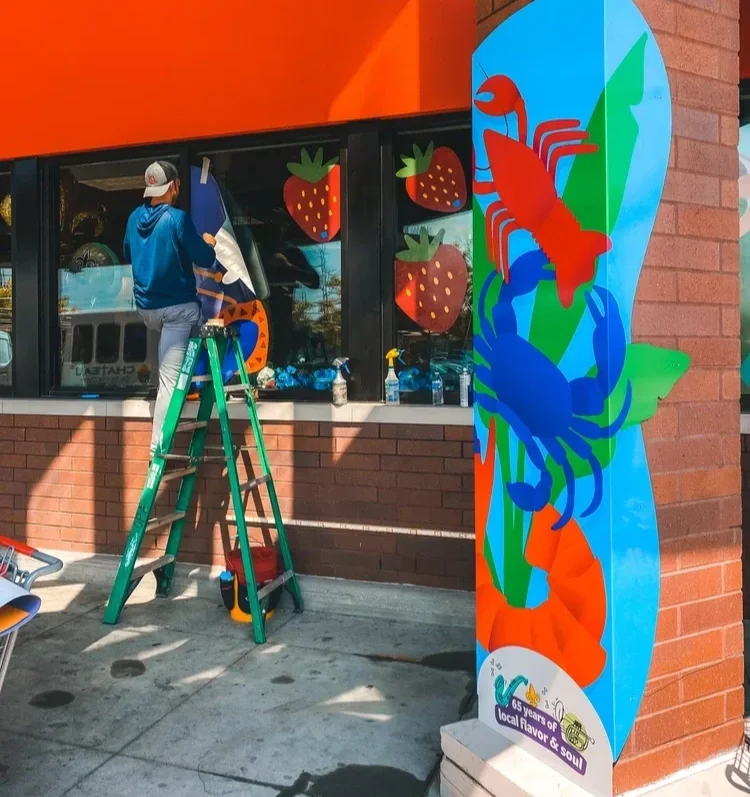
Temporary promotional perforated window graphics being installed by OPA Signs & Graphics.
Polymeric Calendared Vinyl
Polymeric calendared films provide improved dimensional stability and durability.
They are commonly used for:
Storefront graphics
Flat-panel building signage
General outdoor applications
For many projects, polymeric vinyl offers an excellent balance between performance and cost.
Cast Vinyl
Cast vinyl is considered the premium end of the market.
Because it is manufactured differently, cast film experiences very little shrinkage and remains exceptionally stable over long periods.
Cast vinyl is commonly selected for:
Vehicle wraps
Fleet graphics
Architectural graphics
Long-term exterior branding
Complex curved surfaces
When maximum longevity and performance are required, cast vinyl is often the preferred choice. An initial upfront cost is offset by significant graphic lifespan.
SPECIALTY vinyl
Vehicle Wraps
A vehicle presents one of the most demanding environments for any graphic.
Modern vehicles are rarely flat. Curves, body lines, channels, rivets, and flexible panels all create challenges that standard vinyl is not designed to handle. Vehicle wraps require highly conformable materials that can conform to these surfaces while maintaining a smooth appearance and long-term durability through rough roads and frequent washings.
Vehicle wrap films are engineered specifically for these challenges. They feature advanced adhesives and highly conformable cast constructions that allow installers to stretch and manipulate the material while maintaining long-term performance.
Using the wrong vinyl on a vehicle can lead to lifting edges, adhesive failure, shrinking, and premature replacement.
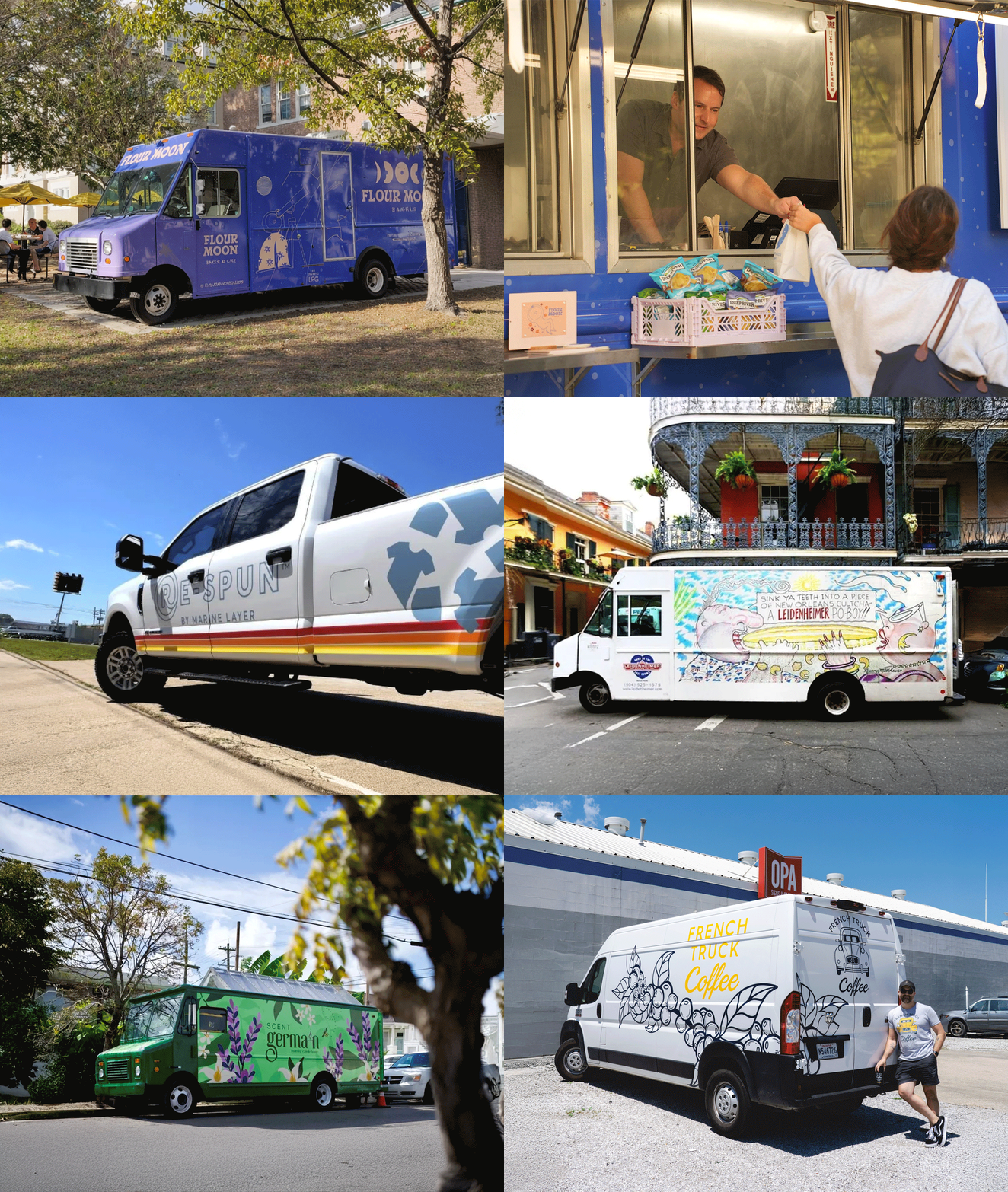
Assorted vehicle wraps produced in New Orleans by OPA Signs & Graphics
Brick and Concrete Graphics
Products such as AlumiGraphics are specifically designed to bond to textured surfaces that would quickly defeat conventional vinyl.
These systems are commonly used for:
Brick walls
Concrete walls
Sidewalk graphics
Stadiums
Campuses
Public spaces
When installed properly, these specialty films can create the appearance of a painted mural without the permanence of paint.
Backlit Graphics
For illuminated signs, cut translucent vinyl is often preferred over printed graphics when clarity and longevity are the primary goals. Because the color exists within the film itself rather than being printed on the surface, logos and lettering typically appear sharper, more vibrant, and more consistent during both daytime and nighttime viewing.
Printed translucent graphics remain a great option for complex artwork and multicolor designs, but for simple branding elements, cut vinyl often provides superior legibility and long-term color stability.
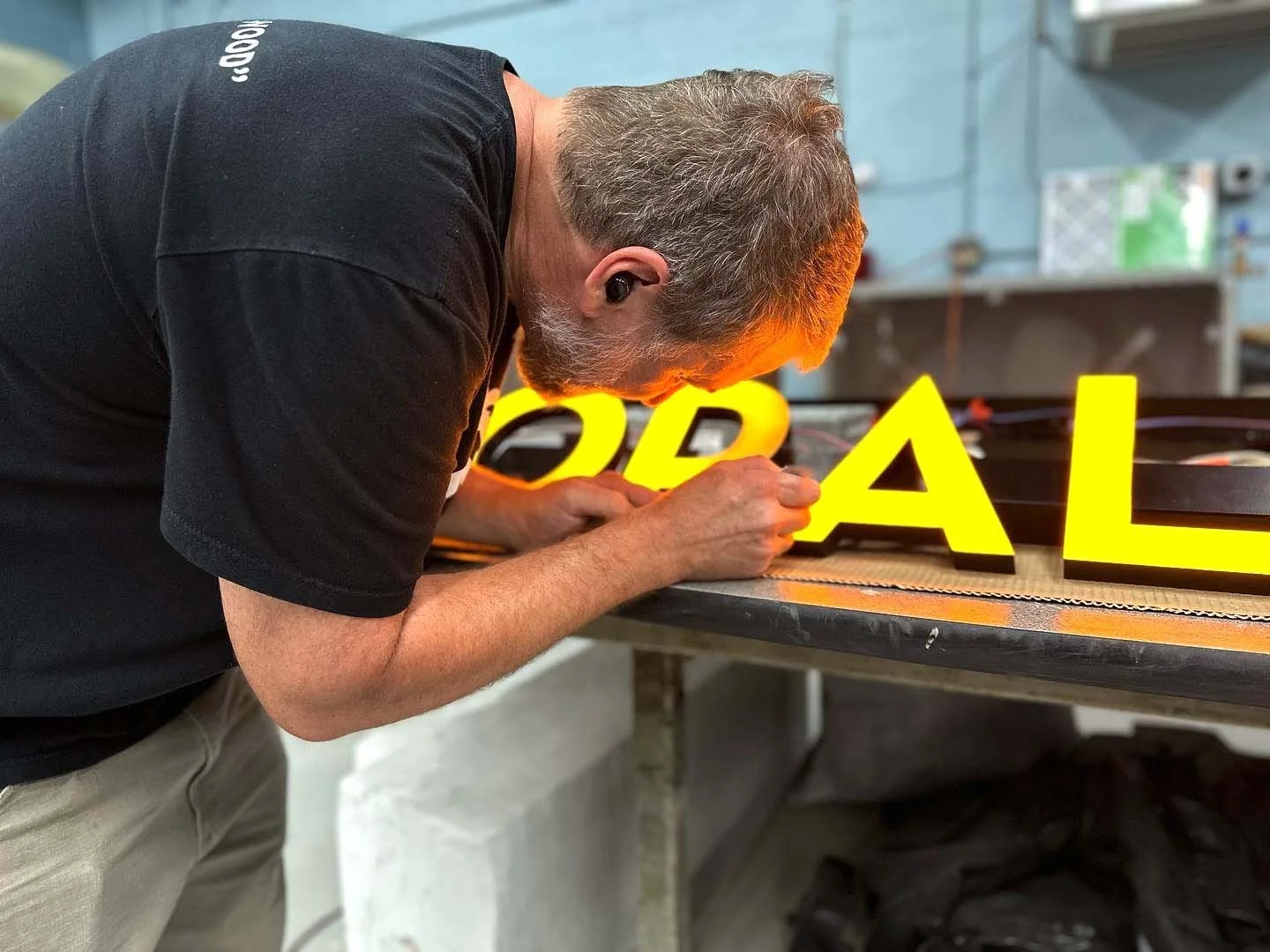
OPA painter Rob touching up a small channel letter set faced with yellow translucent vinyl for Aquarium of the Pacific.
Laminated vs. Unlaminated Vinyl
One of the most overlooked components of a graphic is the laminate.
A laminate is a transparent protective film applied over the printed surface.
Benefits of Lamination
A quality laminate helps:
Protect against UV fading
Resist scratching and abrasion
Improve cleanability
Extend graphic life
Preserve color vibrancy
When Unlaminated Vinyl Makes Sense
Not every project requires lamination.
Short-term promotions, temporary signage, and certain indoor applications can often perform well without it.
However, for most long-term outdoor graphics, a laminate is one of the most effective ways to protect your investment.
Choosing the Right Vinyl Provider
The average customer should not be expected to know the difference between monomeric calendared vinyl, cast wrap film, pressure-sensitive laminates, or specialty wall graphic systems.
A reputable sign company considers far more than just the artwork. The right material selection depends on the surface being covered, exposure to sunlight and weather, the installation environment, the expected lifespan of the graphic, future removal requirements, budget considerations, and the complexity of the design itself. Evaluating these factors upfront helps ensure the finished graphic performs as intended and delivers the best long-term value.
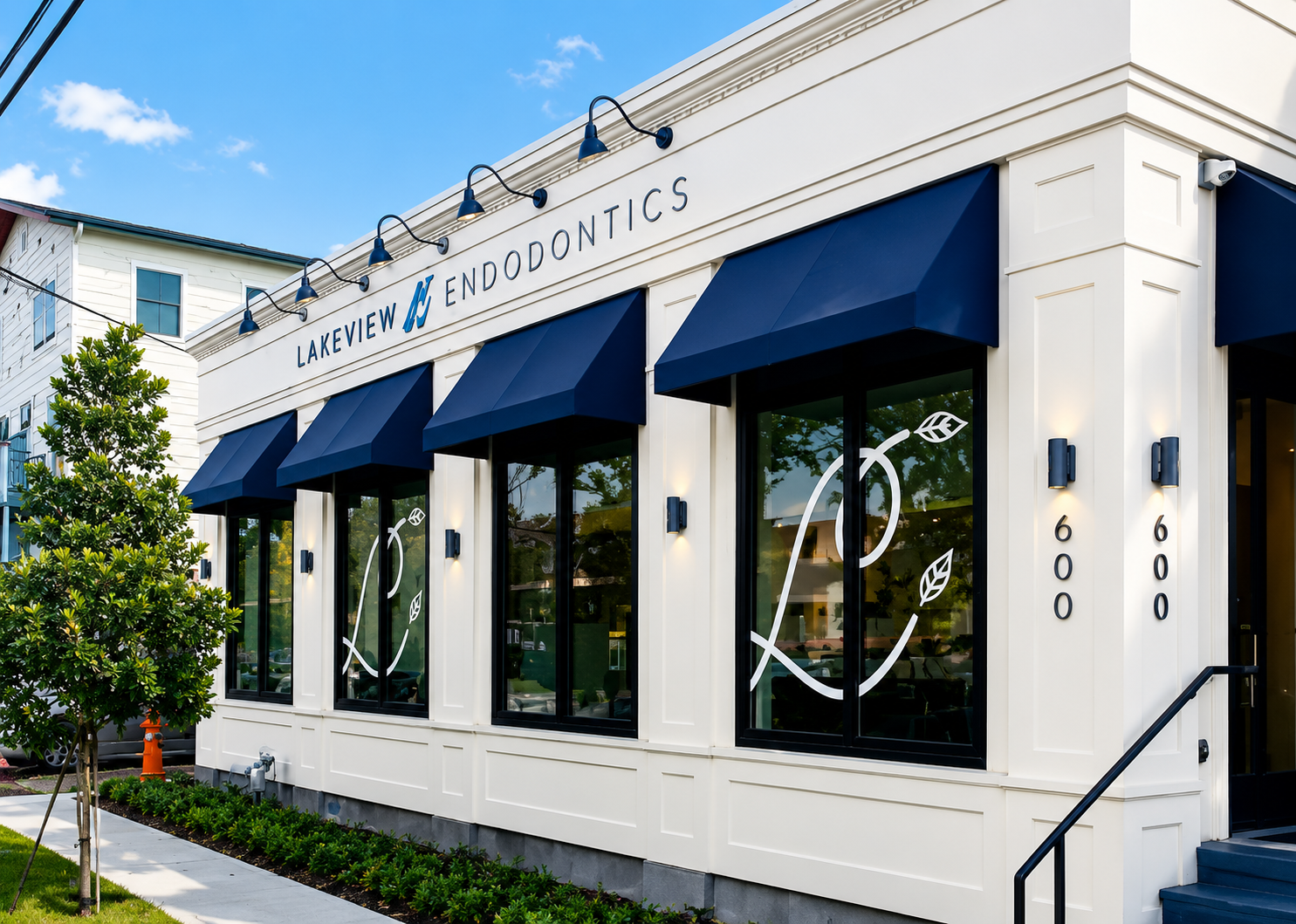
Simple branding executed in cut vinyl decals for Lakeview Endodontics.
The OPA Approach
At OPA Signs & Graphics, we manufacture window graphics, vehicle wraps, wall murals, architectural films, promotional graphics, and custom vinyl signage in-house.
Rather than applying the same material to every project, we select products based on your goals. Whether you need a two-week promotional graphic, a storefront branding package, a fleet wrap program, or architectural graphics designed to withstand years of Gulf South weather, our team can recommend the right solution for the application.
Contact our team to start the conversation.